

JMF established its Civil Society Department in 2004, wherein JMF prioritizes projects and activities that encourage and facilitate youth participation in the development of a strong and healthy civil society, and broaden their perspective and understanding about the role of civil society as a vital part of long-term socioeconomic improvement in Armenia.
To achieve its strategic goals JMF has set the following objectives:

Increase the youth’s knowledge in human rights, gender, legal and governance issues.
Develop the youth’s practical skills for applying the knowledge and skills.
Increase the youth’s sense of citizenship and voluntarism.
To strengthen and enhance participation of a wider citizen base JMF also prioritizes activities that support civil society organizations on different levels.
On the Community Level, JMF helps to establish and works directly with Community Based Organizations (CBO) that function to identify and resolve problems at the grassroots level, and represent the needs and rights of communities at the regional and national level.
On the National Level, JMF supports the activities of the most effective Non Governmental Organizations (NGOs) working across different sectors (health, education, human rights, etc) and supporting the development of citizens groups that have a clear constituency base and mechanisms for civic participation.
On the Institutional Level, JMF collaborates with and assists institutions that support NGO and CBO development through training and technical assistance.
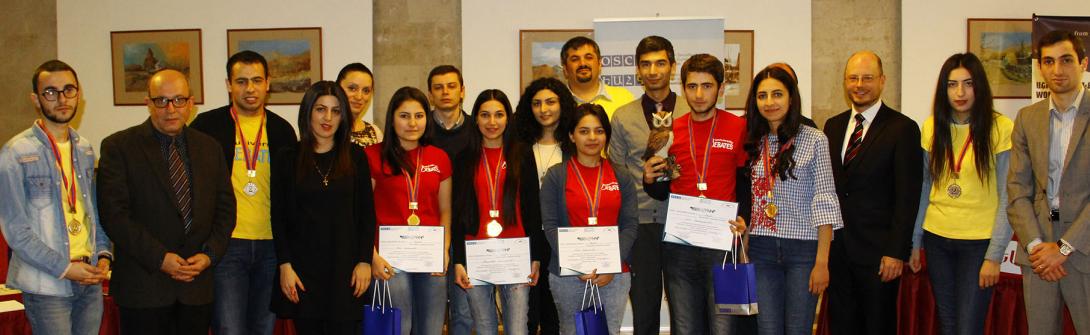
Beneficiaries Description: 50 students from YES project schools will directly participate in 5 TV debates. Additionally, 50 students and 10 mentors will directly take part in the debates as audience.
Beneficiaries Description: Direct beneficiaries are nearly 4,500 university students of 7 universities and 2,000 young adults of surrounding communities, keeping gender balance. Indirect beneficiaries are other students of the targeted seven universities student councils’ members, administration and staff of the universities, families of the students, community members and in general the public of Armenia.
Beneficiaries Description: Direct beneficiaries of the project are 4 individuals from Ombudsman office, Armenia CBOs/NGOs. Indirect beneficiaries of the project are community members, youth, and local government
Beneficiaries Description: Direct beneficiaries of the project are students of 7 universities. At least 280 students from each university will be directly involved in project main activities. Indirect beneficiaries of the project are university administrations, families and friends of the students and the communities the students come from
Beneficiaries Description: Direct beneficiaries are 220 students, 120 as debaters and 100 as observers in the auditorium, from Yerevan and 11 towns’ mainstream schools. Indirect beneficiaries are Yerkir Media TV audience, Schools’ administrations, students, parents of the students.
Beneficiaries Description: Direct beneficiaries are nearly 3,000 university students of 7 universities and 1,500 young adults of surrounding communities, keeping gender balance. Indirect beneficiaries are other students of the targeted seven universities student councils’ members, administration and staff of the universities, families of the students, community members and in general the public of Armenia.
Beneficiaries Description: Direct beneficiaries are nearly 2,000 university students of 7 universities and 1,000 young adults of surrounding communities, keeping gender balance. Indirect beneficiaries are the seven university students, student councils’ members, administrations of the universities and in general the public of Armenia.
Beneficiaries description: 120 children and 20 mentors of YES project from 103 schools who will directly participate in the project /TV debates/. Indirect beneficiaries are schoolchildren, school administrations, and parents of the schoolchildren from all over the country.
Beneficiaries Description: Direct beneficiaries are nearly 400 university students. Indirect beneficiaries are the three university students, student councils’ members, and administrations of the universities
Beneficiaries Description: Direct beneficiaries are nearly 600 university students. Indirect beneficiaries are the three university students, student councils’ members, and administrations of the universities.
Beneficiaries description: Annually about 10-15 participant students selected among: orphans from state and private orphanages, needy youth and anyone interested in learning the vocation, for the preparation and realization of electrical works.
Beneficiaries Description: the residents of three marzes: Kotayk, Aragatsotn and Gegharkunik, that have found themselves in the position of the suspect or the accused and need to make use of the services of Public Defenders.
Beneficiaries Description: Direct beneficiaries are around 2,000 school students from 100 secondary schools. Indirect beneficiaries include secondary school students, teachers, and school administrations of 100 schools
Beneficiaries description: Direct beneficiaries are about 35 students (20 from the JMF’s CDA project and 15 from the EPF’s YB program), some members of JMF and EPF staff and other invited guests/players from the capital
Beneficiaries description: Direct beneficiaries are 1,200 – 1,600 high school students. Indirect beneficiaries include secondary school students, teachers, and school administrations of 80 schools.